Help
Contact us
Demola Logo
For TalentsFor CompaniesDemola for CampusProjectsEventsStories
Apply for Project
Demola Logo

We're a community of passionate experts who believe in the power of collaboration. By connecting emerging talents, companies, and universities through real-world innovation projects, we turn potential into proven skills and fresh ideas into real impact.

InstagramFacebook
For TalentsFor CompaniesFor CampusProjectsEventsStoriesFor MediaContact usHelp

© 2026 Demola Global. DEMOLA is a registered trademark of Demola Global Oy.

Personal data requestPrivacy policyTerms of service
Back
Counterfeit Hunter: The Spare-Part Vision Detective

Prague

Byte-powered Future

Counterfeit Hunter: The Spare-Part Vision Detective

Description

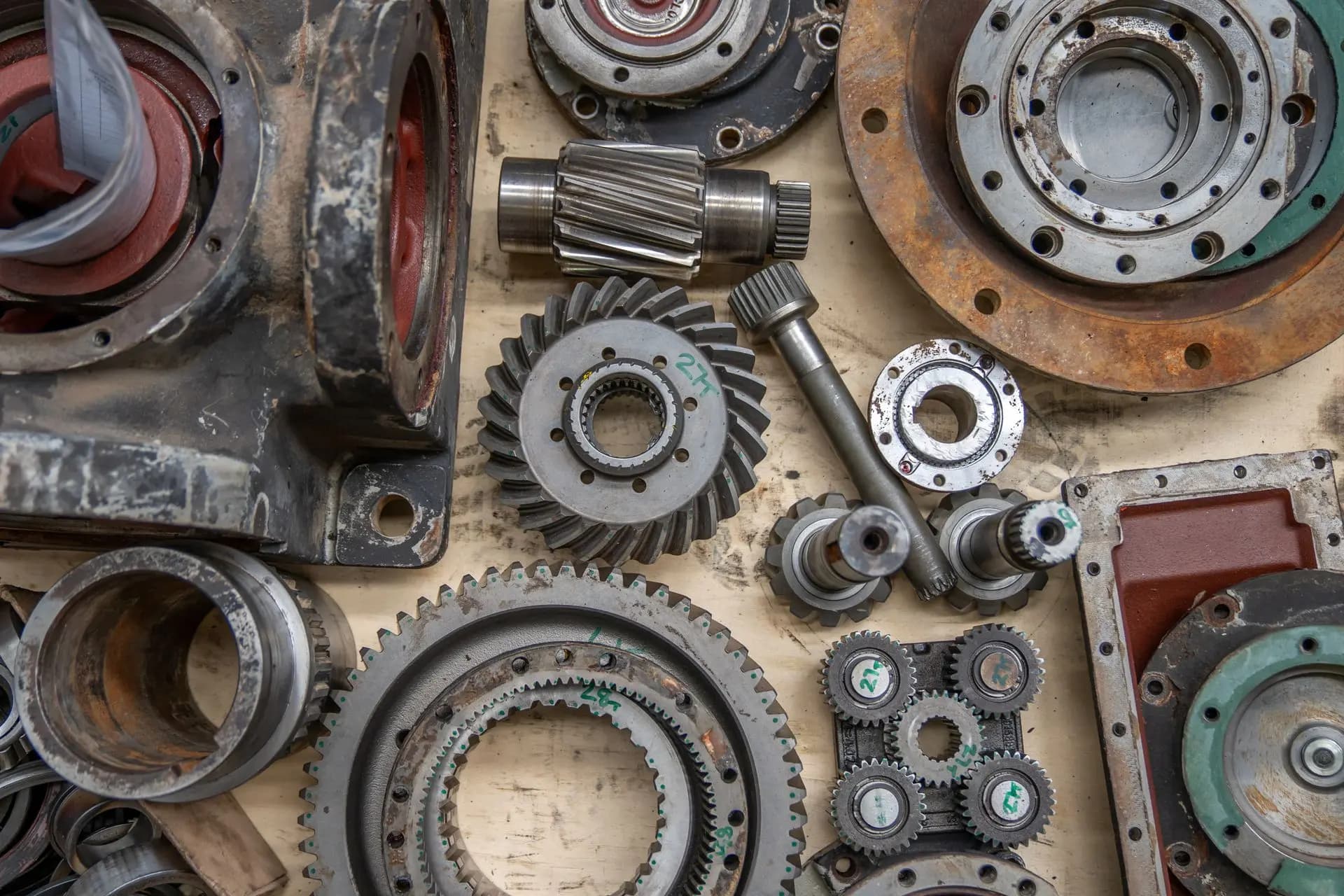
Industrial equipment manufacturers depend on original parts being used in service and maintenance. Non-OEM substitutes find their way into machines through customers cutting costs, through third-party service providers taking shortcuts, and sometimes through outright counterfeit supply chains. The consequences range from accelerated wear and premature failure to cascading damage and voided warranties. A field engineer arriving for a maintenance call has minutes to assess whether the machine in front of them contains the components it should — and today that assessment relies almost entirely on experience and memory. A mobile computer vision tool that can flag suspect components in seconds could make that check systematic rather than heroic.

The bar for usefulness is lower than perfection. Even a confidence score that reliably flags blatantly non-OEM parts ("only 10% confident this is genuine") would already eliminate a large share of non-essential authenticity calls reaching OEM customer service. Full certainty is the ceiling, not the entry requirement.

Problem

Key questions to be answered in the project:

  • Which visual features — markings, surface finish, geometry, colour, wear patterns — are most reliably discriminative between authentic parts and substitutes across different component types?
  • How accurately can a mobile vision model identify suspect components under realistic field conditions: variable lighting, partial visibility, dirt, grease, and camera shake?
  • How should the interface communicate confidence levels to a field engineer — particularly when confidence is low or the component is partially obscured — so that the tool informs rather than misleads?
  • How can authentication be layered, level by level, so each layer raises confidence: visual geometry as a baseline, secure QR codes tied to the part's dimensions, markings invisible to the naked eye, smartphone-based 3D scanning, and packaging features (barcode placement and count)?
  • How many reference images per component type are needed to train a model that generalises reliably to real-world variation in authentic parts?

In this project we aim to...

  • Build a mobile computer vision prototype that lets a user point their phone at a component and receive a confidence assessment of whether it is an authentic original part.
  • Train and validate on generic, easily obtainable parts (e.g. off-the-shelf bicycle components photographed as authentic references against lookalike substitutes) — proving the approach without requiring physical OEM spares. A small set of OEM spare-part photographs serves as illustrative reference for what the industrial target looks like.
  • Cover five to ten distinctive part types and optimise explicitly for realistic field conditions: poor lighting, partial views, and surface contamination.
  • Design and evaluate a confidence communication interface that helps users act appropriately on both high- and low-confidence outputs.
  • Once baseline confidence is established, explore the next authentication layers (QR-plus-geometry binding, invisible markings, packaging assessment) as a roadmap for hardening the system.
Contact person
Jere Wessman
Jere Wessman

Head of Talent Development

+358 40 631 4029

jere@demola.net

Petra Jirásková
Petra Jirásková

Facilitator, Czechia

+420774537011

petra@demola.net

Basic information

Apply by

27 Sept 2026

Location

Prague

Teamwork

In person

Language

English

Timeline

Project starts

08 Oct 2026

Kick-off day #1

08 Oct 2026

Kick-off day #2

09 Oct 2026

Midterm day #1

11 Nov 2026

Midterm day #2

12 Nov 2026

Finals day #1

14 Dec 2026

Finals day #2

15 Dec 2026

Project ends

15 Dec 2026

Related tags

#artificial intelligence

#authentication

#computer vision

#counterfeit

#manufacturing